
 Please, someone should stop the clock from ticking, someone should ask the dogs in the alley not to bark tonight. Someone should go to the street and ask the drivers not to blow their horns and drive slowly. I don’t want to hear tires squealing. I don’t want to hear birds singing. I don’t want to hear any noises tonight. Please turn off the lights, I want it dark. Dark so that I can’t see myself and around me. My hands are numb, I can’t feel anything. I can't see either. There is something wrong with my eyes; they are burning and seem to have no tears left. I am trying to find the windows but they cannot be found. It's an oppressive night. I don’t want to see the stars gleaming up there, and someone should be out there to prevent the moon from glittering. Someone should pull them down, pack and throw them in the trash. The light has become a tyranny tonight.
I want the autumn to arrive soon so that the trees shed their leaves on the moon. I don’t want to see the frail wind blowing through trees and make them sway as if they are prostrating to death. I want tonight as dark as a grave. Someone should help me find the answer, why is it a long night?
Amidst my med-term exams, I received a short message from Qasem, my younger brother in Kabul. He had written: “mom is not feeling well; it has been more than 13 days, she hasn't eaten anything.”
I wrote back and begged him to find a way that I could speak with her. There is no cell service in our area. But I badly wanted to talk to my mother. I wanted to hear her voice and I wanted to hear her again telling me: "my son, when are you coming home, I miss you." I promised her last year to go home and visit her. A week passed. Qasem wrote back to me:
“Nasim, dad called today, I asked him how is mom, he went silent. I asked him again and again: dad, please tell me how is mom? His voice broke with emotion and told me: My son, your mom left us, she is no longer among us.”
My fingers are numb on the keyboard, I can't write him back. What should I write? I have been through difficult times, but no news has ever been more devastating to me than this one. I am drowned in the sea of sorrow. I lost my mother, my beloved one; I lost my strength and supporter who was always there for me in bad and good times.
Tonight, I feel cold and the silence has taken me over and it becomes more and more painful as I am constantly being flooded with my childhood memories. Ah mum! you are not here that I can call you and hear your voice and your laughter.
Mom! You could wait to see your peasant son come back to you from college as a learned person. You could wait to hear my stories. Damn this life when I found myself, I left you and dad in search of food to survive.
In 2004, my mother was suffering from an unknown illness. In 2005, doctors found out that she had diabetes. She passed away due to the shortage of insulin.
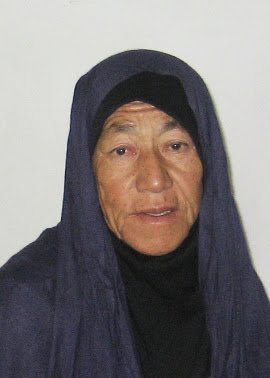
She was a beautiful, strong, peasant woman; she was still young, just 60 years old. I was young when I left the village and didn't see her for several years. Back then, she was young and strong and spent most of her time on the farm. Her dream was that I become a cleric one day.
She was a very kind and generous woman, and taught us to carry her values. She always told us: “if you see a poor person knocking on our door, offer something, don’t let that person go away without any help.” When I first arrived in the U.S., one day I took the subway and at the station, I saw a person's hands stretched out for help. I bought him a cup of coffee because I couldn't pass by without fulfilling my mother's moral duty that was passed on to me.
My mother was illiterate, like my father, but she had mastered cooking, sewing, knitting, embroidery and other life skills. Other women always came to our house seeking advice from her. She was generous and believed that skills and knowledge must always be shared. She raised eight children, one of her young daughters died at age 18. She was survived by her husband and seven children (two daughters and five sons).
We grew up on subsistence agriculture, we were poor, but the farming provided a degree of self-sufficiency. We worked really hard. We did not have money though. We got our supplies through bartering. My mother played an important role in our lives. When she passed away, everything fell apart.
Last year, I promised to visit her this summer but she is not there any longer. She is not there to stand at the overlook, on the big rock at the corner of our mud house, and look down into the narrow path in the valley as I am arriving. She is not there anymore to cook for me her delicious food and tell me: “I want my son to be strong and healthy.” It made me think that I have been his favorite child. I miss her so much as I am recollecting the fragrant smell of her cooking.
Mom! You didn’t wait for me. I want your demure smile now, your scent and your looks. I want your strong but gentle hands stroking my face, I want you to tell me your fairy tales like you did when I was young, I want your encouragement and your support. I feel so weak and unproductive nowadays.
No, no, she is not here any longer but I want her now. I want to go back to her and find her at the corner of the living room in our old mud house, sitting and sewing socks and gloves for her children. I want her telling me: Nasim, fetch a glass of fresh water from the spring gurgling through the rocks not too far. I want her to ask me to go to the farm and collect grass for sheep, goats and cows.
No, no, she is not there anymore. No one is there to patiently listen to my stories. No one will be as worried about me as she was. No one will call me to go to the village for fresh milk and yogurt.
Mom! You could wait to see your little shepherd son, who used to take your goats and sheep to the mountains for grazing, is now a grown man. You could wait to see how much I am changed and I have become a man of my own as you wished.
Mama! You could wait and see that your Nasim is no longer a naughty boy; he is no longer a troublemaker; he no longer hides on trees, and he no longer throws rocks at birds. He has traveled far and shaken hands with wise people. You could wait until I come back and I would tell you the stories of my travels, but with whom I can share my stories after you?
I remember those days when I was little, I followed you on the farm, on the hills, on the mountains and on the prairies as you were collecting grass for the herd. Someone should take me home. I want to be with my mother on the farm now. I want to go back to the days seeing myself following her on a narrow path to the grassland and collecting grass for the cattle.
Mom! You used to call me, "my little champ." I used to carry your baskets and your loads of grass in the field. We together fed the cattle and cows. When you were milking them, I held the bucket for you. I remember those days I was collecting woods for your oven. I remember you baking bread and when the first bread was out of the oven, you gave it to me with a glass of fresh milk.
I remember you told me that I was born during the Soviet invasion. One day when the helicopter appeared in the sky and started dropping bombs on our village, you were looking for safety, you took me to the mountains and hid in a cafe. That must had been terrifying.
Mom! I heard, after you everything went into silence. No one talks loudly to each other, they dress in black, walk slowly, your place at the corner of our old house is empty, near the furnace, where in winter was the warmest place, where you were sitting and making socks, jerseys, gloves for your children.
Last year when I came to visit you, I held your thick and strong hands in mine, the hands that held me, caressed me and pulled me up from the ground. I kissed them. I noticed some deep cracks in your hands. I saw an age-old battle against hardship and an age-old hardworking and striving for a better life. I'm the sum total of your suffering and your determination. I am the culmination of your dreams. Yes, your dreams!
Mom! Forgive me that I was not by your side and that I couldn't say goodbye. Forgive me that I was not there to take care of you, especially during the last days of your life!
It was a great honor to have been raised in your arms! Thank you for all your hard work and for passing on your compassion and kindness! Thank you for raising me into the strong, ambitious, genuine and open-minded individual that I am today!
You will be missed, Hawa, my beloved mom!
Your son,
Nasim
This comment has been removed by a blog administrator.
ReplyDeleteThis comment has been removed by a blog administrator.
ReplyDelete